Welcome to Prof. David Bodine’s Research Group Website!
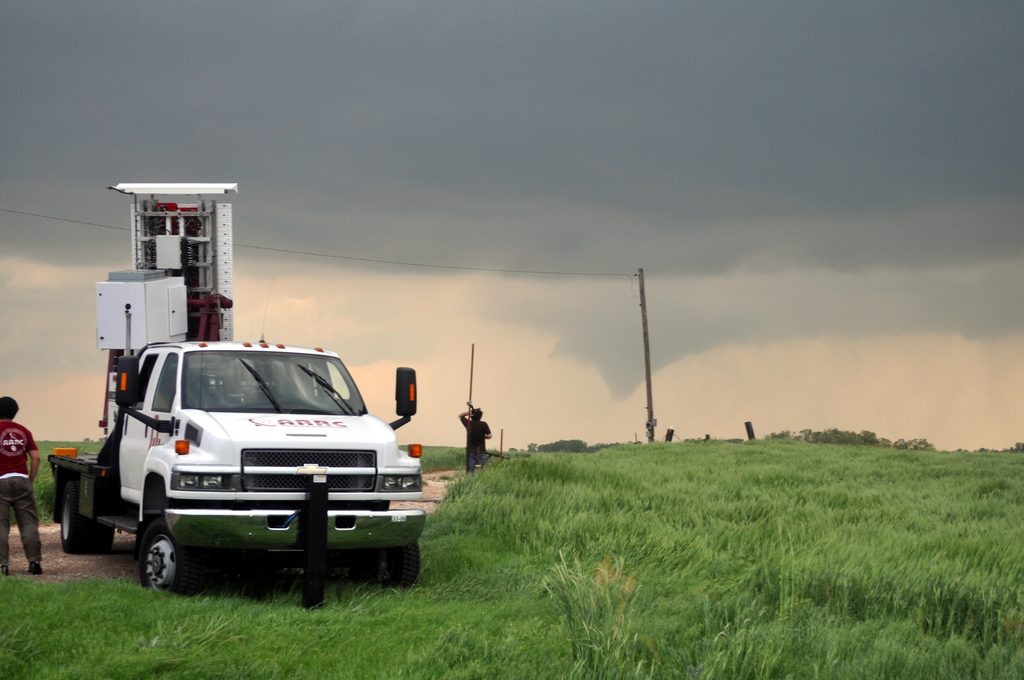
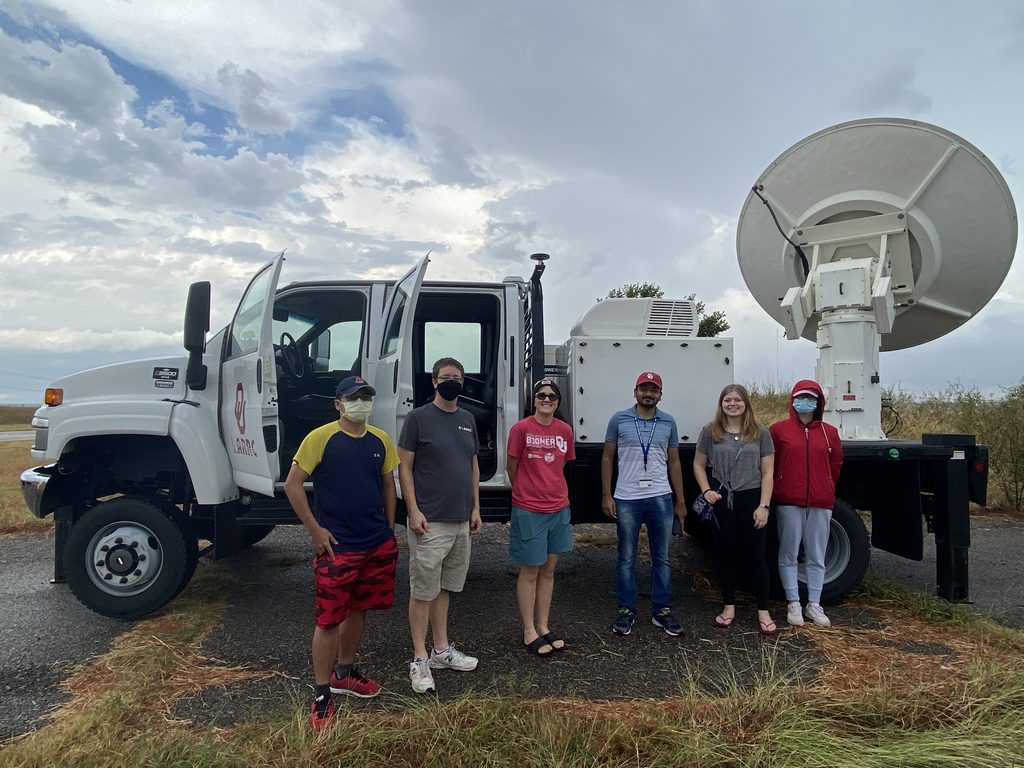
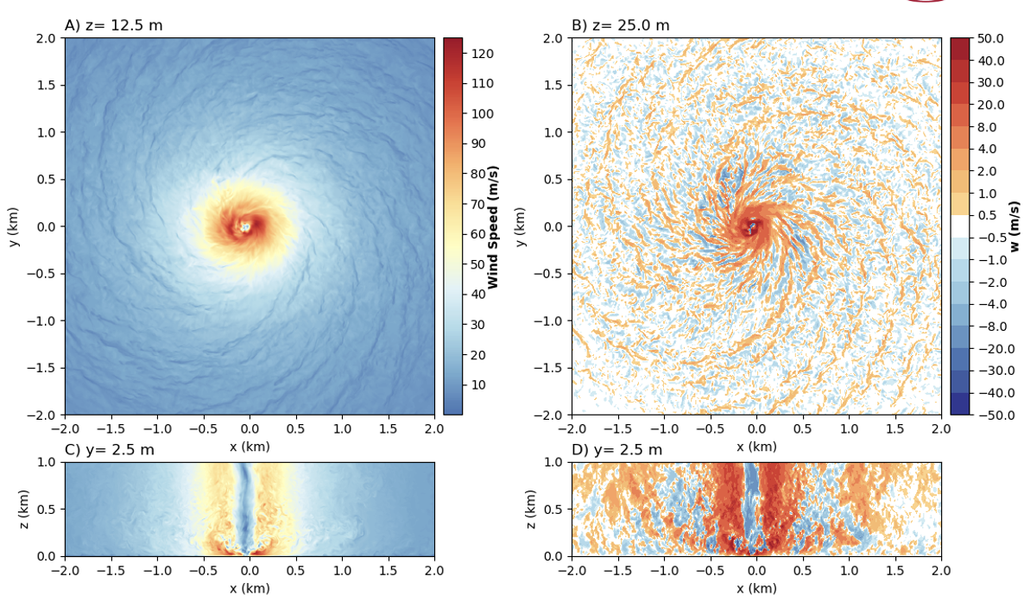
I am an Associate Professor in the School of Meteorology at the University of Oklahoma. My research group investigates the dynamics of supercells and tornadoes through the integration of state-of-the-art weather radar observations and high-resolution numerical modeling. We examine the microphysical and dynamical processes that contribute to tornadogenesis and identify dual-polarization precursor signatures linked to hail and damaging winds. In addition, we use high-resolution numerical simulations to study tornadoes and their interactions with complex land surfaces, such as neighborhoods, large buildings, variable landscapes, and complex terrain. In addition, we also collaborate with electrical and computer engineers at the Advanced Radar Research Center to develop and deploy innovative radar technologies, advancing both fundamental understanding and operational applications.
Feel free to click here to learn more about my group’s research activities, our group members, teaching activities, and recent publications.
Here is the latest news from our research group!
- August 2026: Diego Martinez has joined our research group this fall! Welcome Diego! He will be working on analyses of mobile radar observations of supercells and tornadoes and applying self-organizing maps to understand tornadogenesis. Diego also received the National Science Foundation Graduate Research Fellowship Program for his excellent proposal!
- July 2026: Our study focused on understanding large building effects on tornadoes was published in the Bulletin of the American Meteorological Society! This study used our LES model simulations of buildings, and we conducted comparisons with damage surveys and found good agreement. The work highlights potential areas of accelerated flow near large buildings that have implications for nearby residential structures.
- July 2026: A big congratulations to Rachael Cross for successfully defending her Dissertation! Rachael’s Dissertation focused on comparisons of dual-polarization radar signatures between observations and idealized models to improve polarimetric forward operators and evaluate realism of simulated supercells for different microphysics schemes. Rachael will be working as a National Research Council postdoctoral fellow at the National Severe Storms Laboratory.
- July 2026: Congratulations to Robby Frost who successfully defended his Master’s Thesis! Robby’s thesis focused on analysis of near-surface vorticity structures in the inflow of the 10 May 2010 EF4 tornado using OU-PRIME. Robby will be continuing to work with Joshua Gebauer and myself for his PhD, using both radar and lidar observations to study how vorticity streaks (worms) in the inflow impact tornadogenesis.
- June 2026: Sam Emmerson’s PhD research has been published in Geophysical Research Letters! This study analyzed three-dimensional wind data from our passive radar network to examine tornadogenesis within a quasi-linear convective system.
- June 2026: Hyeri Kim’s postdoctoral research was published in the AMS Artificial Intelligence for the Earth Systems (AIES) journal. Her study developed a novel machine learning approach to identify convective boundary layer structures in clear-air radar observations using convolutional neural networks.
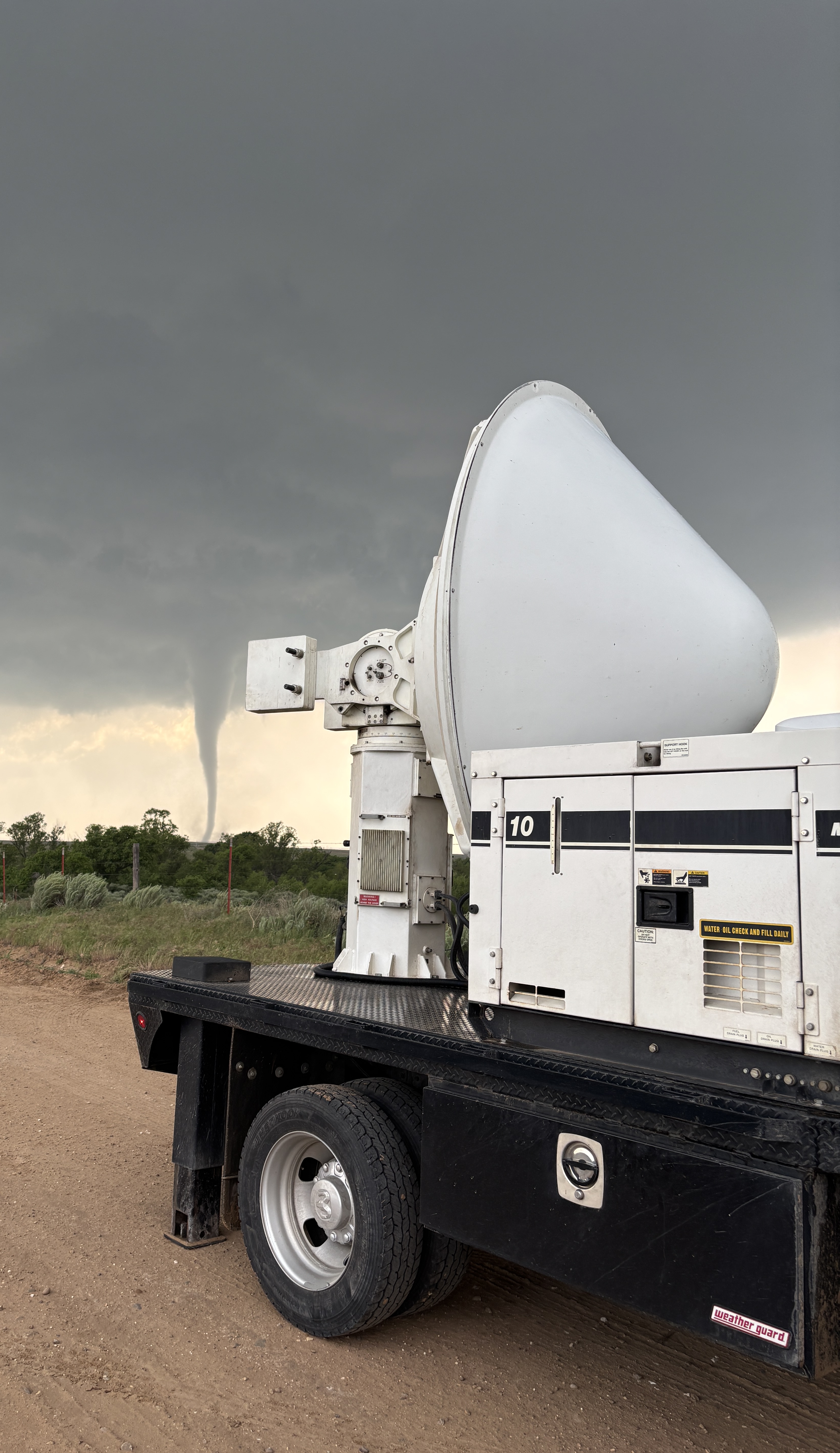
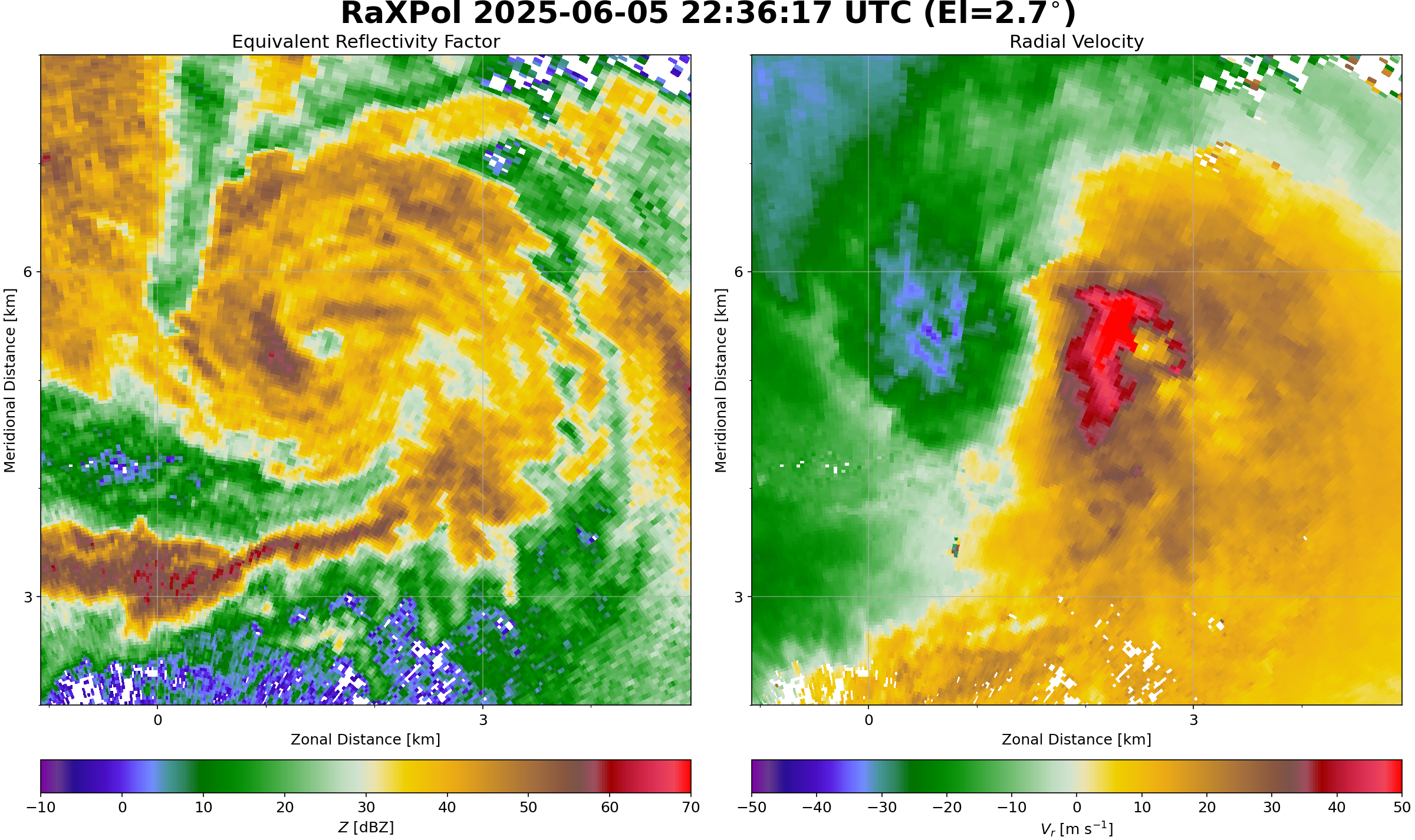
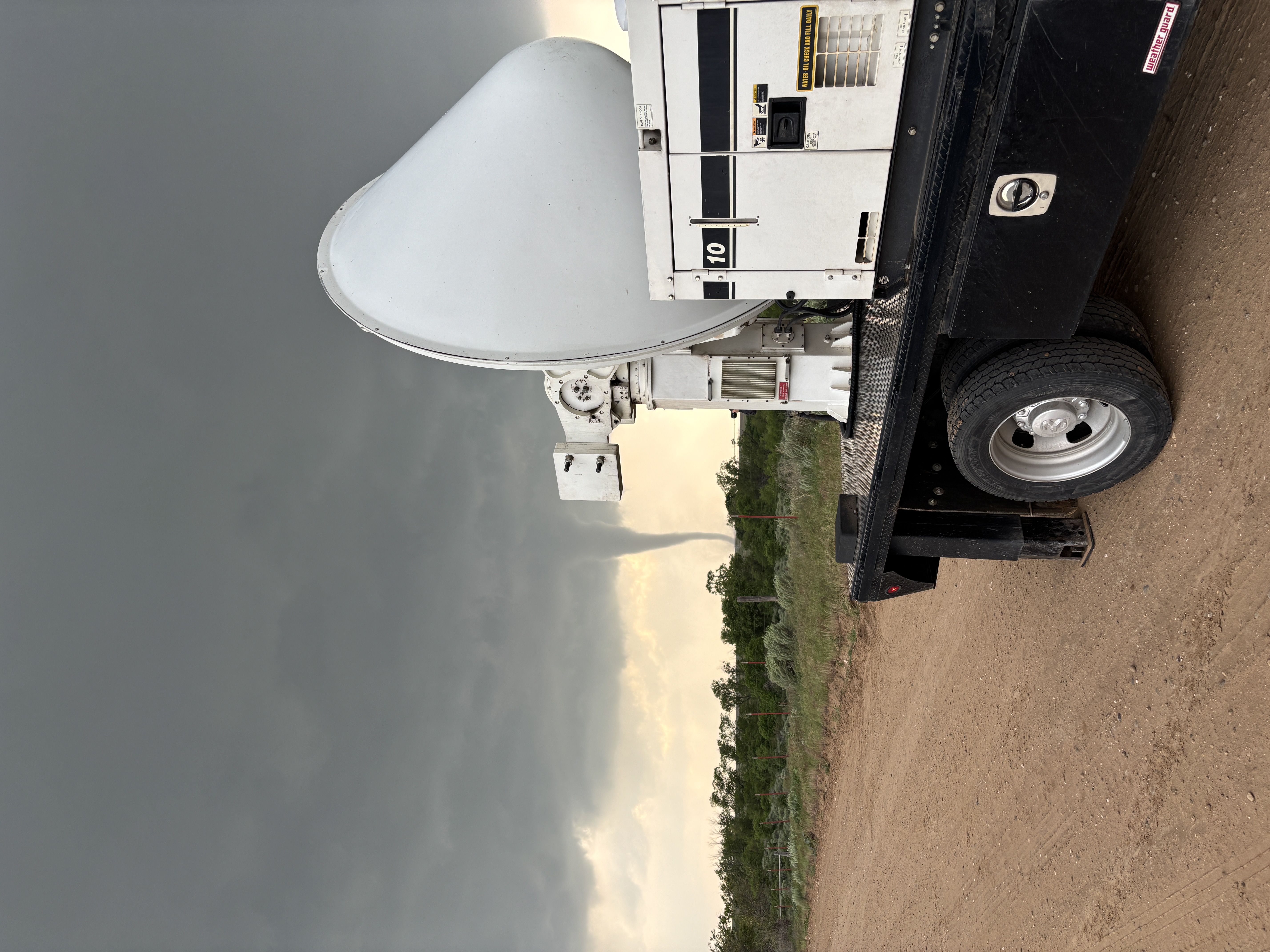
- May – June 2026: We had a busy spring and summer with field work! In partnership with MetroWeather, Inc., we deployed our mobile Doppler lidar to collect observations of supercell inflow in collaboration with LIFT (CIWRL/NSSL/TTU). We also participated in the NSF-funded Phased Array Polarimetry for Electrification and Lightning (PAPEL) project to collect rapid-scan observations of thunderstorms and lightning signatures. Finally, we participated in a RaXPol CIF deployment to support the Purdue SPOTTR field research course in early June, and we enjoyed getting to know the Purdue atmospheric science students and faculty helping them run RaXPol.